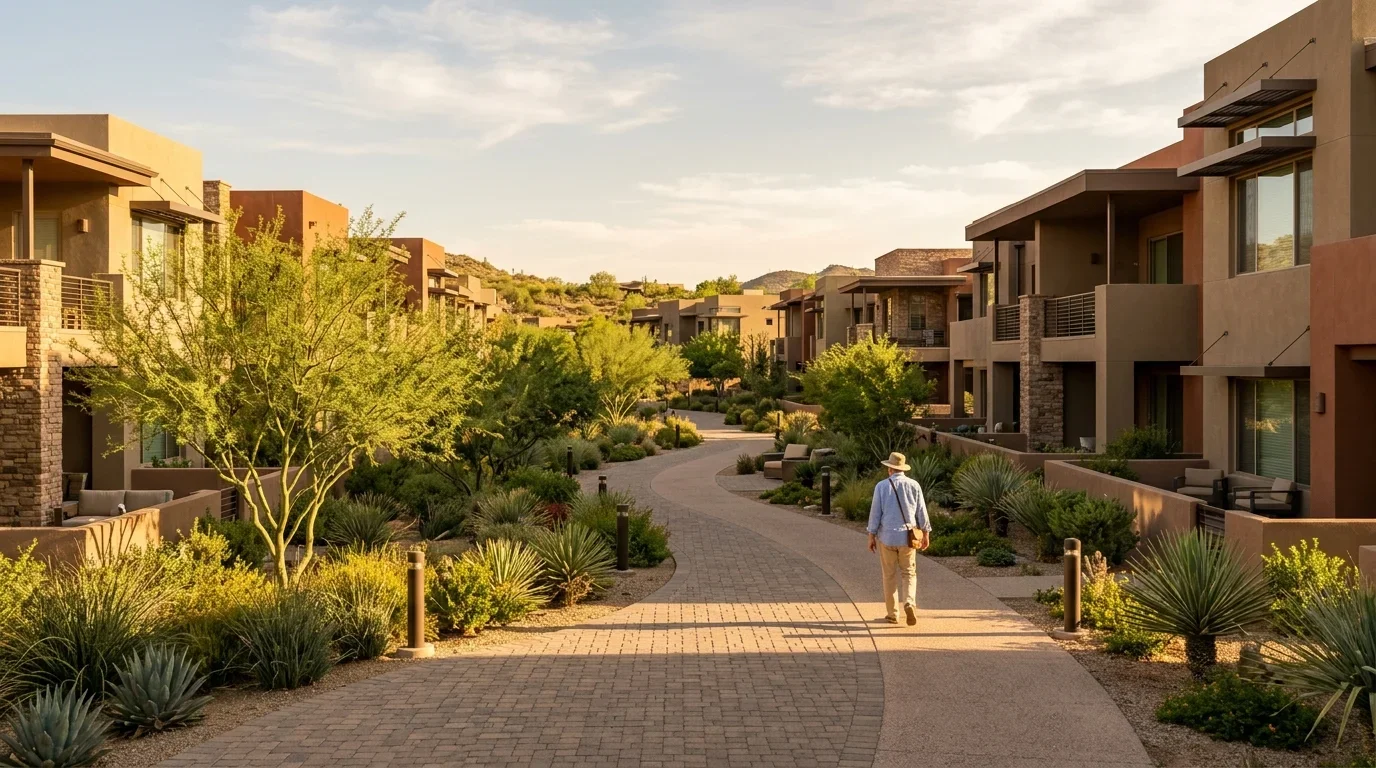
AI-generated illustration, not a photograph of a specific building.
Dubai Silicon Oasis is often viewed through two completely different lenses: commercial founders know it as an established technology free zone, while home-seekers view it as an accessible residential address. Deciding whether to buy an apartment or villa here comes down to understanding where its legal designations, transit realities, and price points genuinely fit your profile.
Tech park or neighbourhood? It is both
What Dubai Silicon Oasis is and who runs it
Established under Law No. (7) of 2004, the Dubai Silicon Oasis Authority operates under the governing umbrella of the Dubai Integrated Economic Zones Authority (DIEZ). Its mandate combines high-technology enterprise enablement with master-planned, high-density residential quarters.
A common misconception among newcomers is that living in Silicon Oasis requires being employed by or owning a free zone company. In reality, residential tenancies and property ownership operate under standard Dubai statutory mechanisms. Free-zone corporate regulations govern company licensing inside tech clusters like Dubai Digital Park, but residential real estate is registered and governed under the oversight of the Dubai Land Department.
Where it sits relative to the rest of Dubai
Silicon Oasis occupies an inland quadrant bordered directly by Sheikh Mohammed Bin Zayed Road (E311) and Dubai-Al Ain Road (E66). It sits directly adjacent to Dubai International Academic City to the south and Nad Al Sheba to the west. If you are comparing this location against another entry-price community, International City, Silicon Oasis features wider arterial internal roadways and a self-contained commercial core.
Who actually lives and rents here
Because Silicon Oasis directly borders Academic City and houses extensive corporate business parks, official leasing patterns reflect a distinct resident base:
- Tech and corporate employees: Professionals working inside DSO tech campuses, Silicon Central, and adjacent logistics hubs who prioritise proximity to the E311 corridor.
- Academic faculty and tertiary students: Students and university staff from the adjacent Academic City campus clusters seeking studio apartments or one-bedroom homes.
- Mid-income families: Families occupying two- to three-bedroom apartments and villa sub-communities (such as Cedre Villas) to remain close to established schools and healthcare institutions located within the perimeter.
What buyers pay
Asking prices in current listings
Individual portal listings were not sampled for asking price averages in this guide. Because asking prices on secondary portals can reflect unverified seller expectations rather than completed contracts, this guide evaluates the community exclusively against registered government records.
Recorded sale prices
Based on official transaction data from the Dubai Land Department (DLD) and Dubai Pulse open registries for the DSO sector (Wadi Al Safa 2):
- Ready secondary apartments: Established residential buildings historically trade within the AED 950 to AED 1,150 per sq. ft. benchmark.
- Off-plan developer launches: Contemporary branded projects launched along peripheral plots command premiums from AED 1,600 to over AED 1,900 per sq. ft., reflecting extended post-handover payment structures and modern lifestyle facilities.
To understand how these capital entry thresholds contrast with other districts across the emirate, examine other budget-friendly communities and our comprehensive review of how rental yields compare across Dubai.
Service charges
Service charges in Silicon Oasis are not charged as a uniform flat rate across the district. Instead, RERA's Mollak system approves annual budgets on a building-by-building basis. According to the official DLD Service Charge Index, typical residential apartment fees in DSO range between AED 10 and AED 18 per sq. ft. per year, determined by the building's chiller setup, elevator count, and common amenities. For practical steps on verifying building budgets before purchasing, consult our guide on how service charges work.
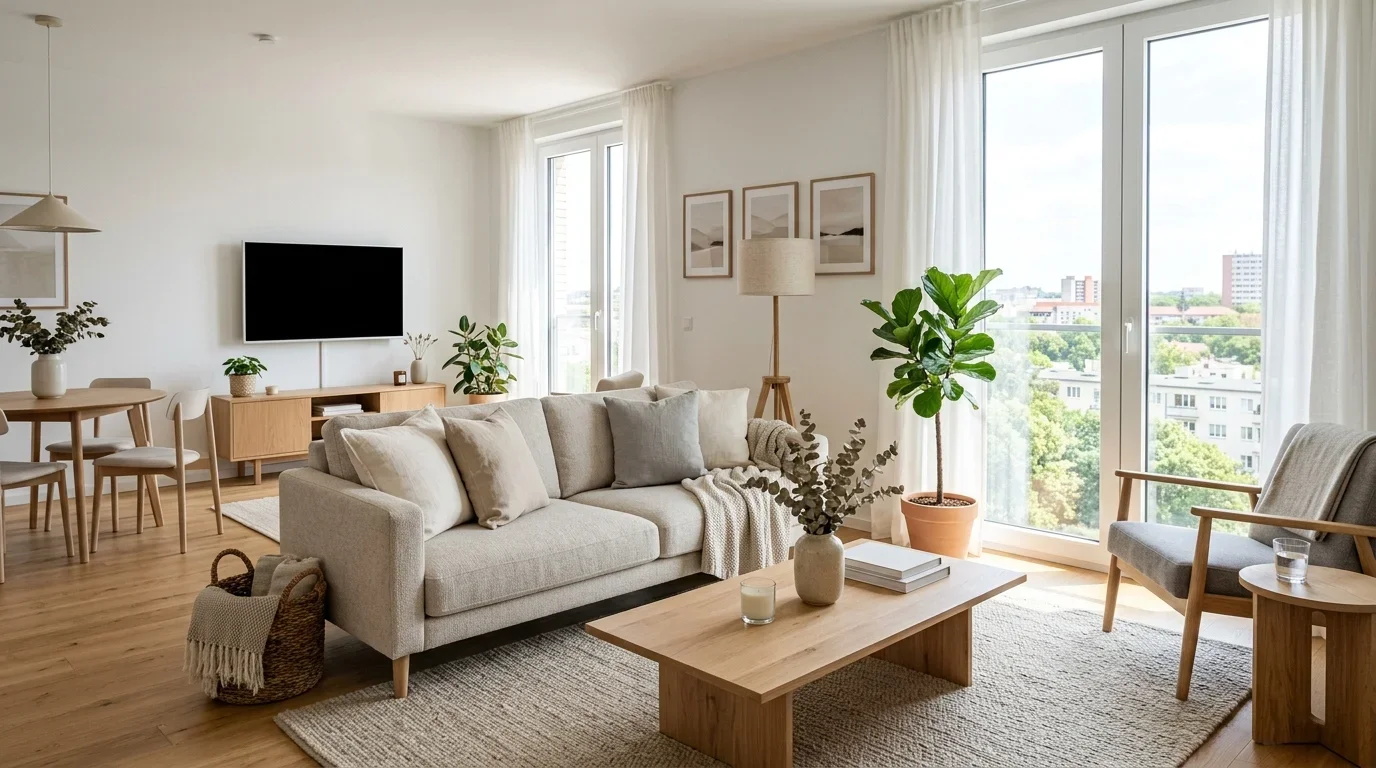
AI-generated illustration, not a photograph of a specific building.
Daily reality: transport, schools, healthcare
Transport and road connectivity
As of 2026, there is no operational Dubai Metro station inside Dubai Silicon Oasis. Public transit connectivity is managed by the Dubai Roads and Transport Authority (RTA) through dedicated feeder bus lines that route passengers to Centrepoint Station (Red Line) and Rashidiya bus stations.
For future transit planning, the RTA has approved and commenced construction on the 30-kilometre Dubai Metro Blue Line, which includes a designated station scheduled to serve Dubai Silicon Oasis upon commercial launch in September 2029. Until that line opens, daily commuting relies primarily on private vehicles, carpooling, or public bus links via the E311 and E66 interchanges.
Schools
Families living in DSO have access to private schools situated directly inside the master plan, inspected and rated by the Knowledge and Human Development Authority (KHDA):
- GEMS Wellington Academy – Silicon Oasis: British curriculum, officially rated Very Good by the KHDA.
- The Indian International School (DSO Branch): CBSE curriculum, officially rated Good by the KHDA.
- Vernus International School: American curriculum, officially rated Acceptable by the KHDA.
Healthcare
The primary inpatient medical anchor inside the community is Fakeeh University Hospital, a licensed Dubai Health Authority (DHA) 350-bed academic hospital and smart medical centre equipped with a 24/7 Level II Trauma emergency department. Multiple outpatient polyclinics and diagnostic centres operate across Silicon Central and the surrounding commercial towers.
Who should not buy here
Silicon Oasis offers attractive yield profiles and manageable ticket prices, but it is not the right choice for every buyer:
- Car-free commuters who need a metro station today: If your daily routine depends on walking to a rail platform before the Blue Line's 2029 completion, the current reliance on feeder buses will prove inconvenient.
- Buyers seeking high-end luxury waterfront property: DSO is an inland, practical community designed for functionality and mid-market tenancy. It does not cater to high-net-worth resort or prime waterfront lifestyles.
- Investors who skip Title Deed due diligence: Because DSO contains both freehold sub-developments and historical leasehold plots, purchasing without verifying whether the unit carries a DLD Freehold Title Deed introduces substantial resale and inheritance complications. Always confirm where foreigners can buy before putting down a deposit.
- Buyers operating on tight cash reserves: While purchase prices are accessible, initial acquisition outlays (including the 4% DLD transfer fee, registration trustee fees, and agency fees) must be accounted for upfront. Review the full cost of buying before making an offer.
So What? Our recommendation
Budget-conscious pick: A ready secondary studio or compact one-bedroom apartment in an established, freehold-registered tower. This entry point provides low capital exposure and reliable tenancy demand from nearby university students and tech employees, with the trade-off being older building aesthetics and reliance on road transport.
Stretch pick: A three- or four-bedroom villa in Cedre Villas or a new off-plan residence along key master avenues. This option makes sense for end-user families seeking schooling and healthcare within the community perimeter, provided you confirm the specific plot's freehold title deed status with the Dubai Land Department.
General information, not financial or legal advice.
Questions readers ask
Dubai Silicon Oasis has a mixed legal status. Specific sub-communities and approved apartment developments are designated as freehold by the Dubai Land Department (DLD), allowing foreign buyers to hold absolute Title Deeds. Other parcels operate on long-term leasehold contracts. Always verify the title deed classification before transacting.
Yes, foreign nationals can purchase property in Dubai Silicon Oasis, but only within buildings and sub-developments registered with the Dubai Land Department as freehold. In leasehold parcels, ownership is restricted to long-term tenancy or UAE/GCC nationals.
Currently, there is no operational Dubai Metro station inside Dubai Silicon Oasis. Public transit operates via RTA feeder buses connecting to Centrepoint Station. The RTA Dubai Metro Blue Line is under construction, with a designated Silicon Oasis station scheduled for completion in September 2029.
Service charges are set per building by RERA's Mollak system based on audited annual budgets. Rates typically range between AED 10 and AED 18 per square foot annually depending on the tower's age, elevators, and amenities.
Dubai Silicon Oasis yields remain stable because of consistent tenant demand from staff working within the free zone and students at nearby Dubai Academic City. However, individual returns depend heavily on the purchase price per square foot and the building's Mollak service charges.